
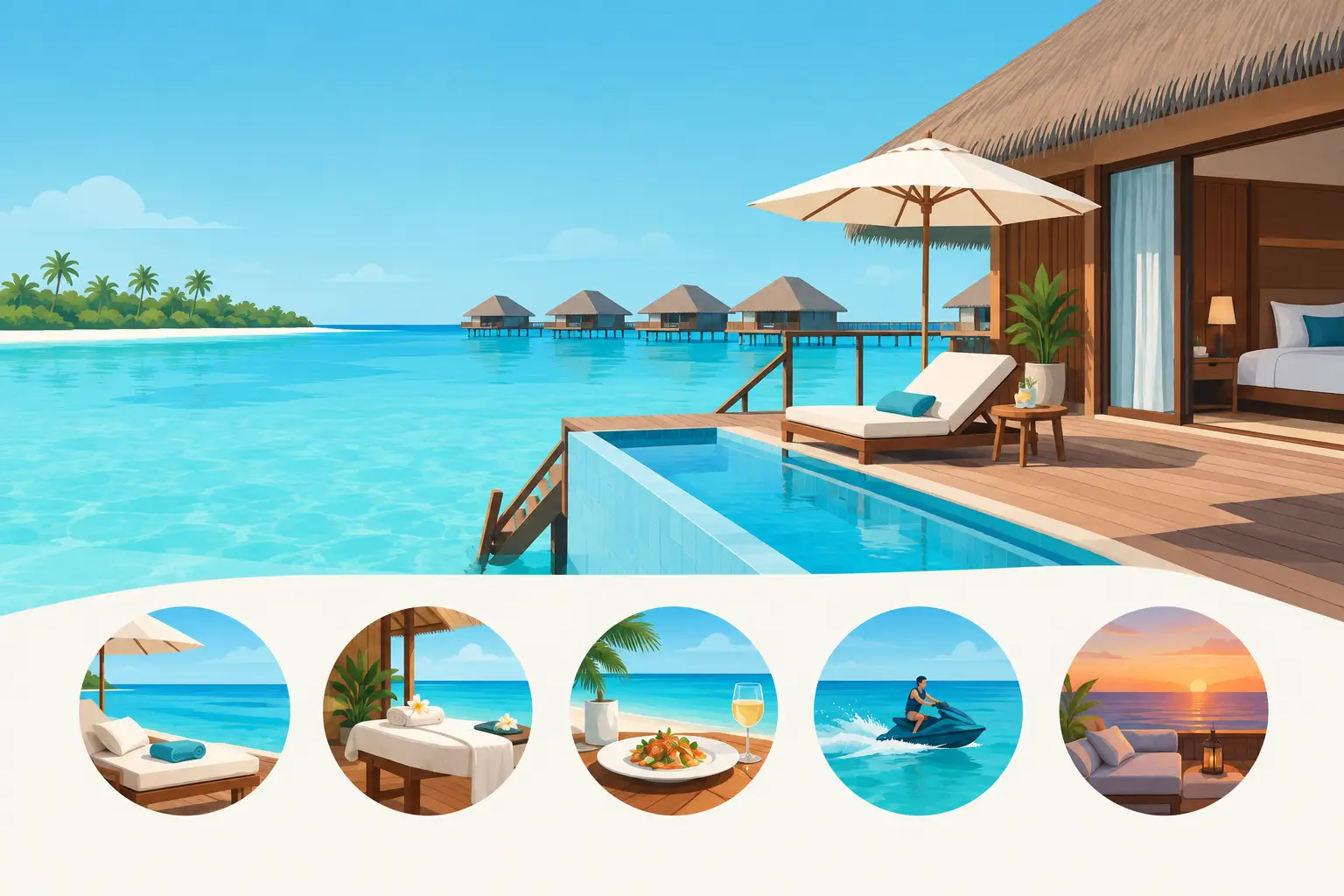
Maldives Resort Amenities That Sell Better Stays
A guest may remember the turquoise lagoon first, but the Maldives resort amenities determine whether a stay feels effortless, distinctive, and worth recommending. For travel professionals, amenities are not simply a resort checklist. They are the details that shape package value, clarify the right guest fit, and prevent expectation gaps before a booking is confirmed.
An overwater villa with a pool may be the headline. Yet the availability of all-day dining, the quality of a kids club, the transfer schedule, reef access, and the inclusions attached to a meal plan can matter just as much. Selling the Maldives well means matching these details to the traveler rather than assuming every private island delivers the same experience.
Maldives Resort Amenities Start With the Villa
Accommodation remains the strongest visual and commercial driver in a Maldives proposal. Beach villas, water villas, residences, and private island-style estates can appear similar in photography, but their practical differences influence both rate positioning and guest satisfaction.
The first consideration is location. A beach villa offers direct access to sand, shade, and garden space, which can be particularly appealing for families with younger children or guests who prefer to enter the sea gradually. Water villas provide the iconic Indian Ocean setting, often with steps into deeper water and greater privacy, but they may not be suitable for every family, mobility requirement, or comfort level.
Private pools add clear value, especially for honeymooners, multigenerational groups, and guests seeking a more exclusive rhythm. Advisors should still look beyond the pool itself. Its size, privacy, orientation, and whether it is heated can vary significantly. A sunset-facing villa may command a premium for good reason, while a lagoon-facing category may be better for guests who prioritize calm water and snorkeling access.
Room inventory also needs to be assessed against the booking party. Interconnecting villas, two-bedroom residences, sofa bed policies, and maximum occupancy rules are essential details for families and groups. A premium family package is only as strong as its sleeping arrangements. Travelers will notice quickly if a resort described as family-friendly offers limited practical options for older children or teenagers.
Dining Is an Inclusion Strategy, Not a Footnote
Dining is among the most influential Maldives resort amenities because it affects daily spend, perceived luxury, and the guest’s freedom on island. The meal plan should be positioned with the same care as the villa category.
Bed and breakfast can suit travelers who want flexibility and intend to explore specialty restaurants, but this approach can create significant out-of-pocket spend at a remote island resort. Half board works well for guests who plan relaxed days and restaurant dinners, while full board may appeal to families and longer stays. All-inclusive is often the clearest choice for guests who value price certainty, provided the inclusions are understood in full.
Not all all-inclusive plans are alike. Some cover meals at one main restaurant and selected house beverages; others include multiple dining venues, premium drinks, minibar replenishment, motorized watersports, spa credits, or excursions. The difference is material. A package that appears competitive on the initial rate may be less compelling if specialty dining, beverages, or activities are excluded.
For higher-end travelers, restaurant variety is part of the resort identity. They may expect international cuisine, fresh seafood, private dining, destination dining on a sandbank, or chef-led experiences. For guests with dietary requirements, the operational standard is equally important. Clear vegetarian, vegan, halal, gluten-conscious, and allergy-aware options can turn a good property into the right property.
The Reef, the Lagoon, and the Experience Beyond the Villa
The Maldives is not a single resort experience. The surrounding water conditions can be dramatically different from one island to another, and this is where destination expertise adds real value.
A house reef within easy reach is a compelling amenity for snorkelers and divers. It can reduce the need for daily boat trips and make marine discovery part of an ordinary afternoon. However, a strong reef may come with deeper water, currents, or less expansive shallow lagoon space. Guests traveling with small children may prefer gentle lagoons and broad sandy beaches, even if snorkeling requires a boat excursion.
Watersports centers are another meaningful differentiator. Complimentary non-motorized activities such as kayaking, paddleboarding, and windsurfing create accessible daily entertainment. Diving centers, surf programs, dolphin cruises, manta ray encounters, and fishing excursions allow a resort to serve guests who want more than uninterrupted relaxation.
Trade partners should avoid presenting every water-based experience as universally available. Seasonality, weather, marine life patterns, minimum age rules, and operational schedules all affect what can be delivered. Positioning an excursion as subject to conditions protects the guest experience and reflects responsible destination planning.
Wellness and Recreation Should Match the Guest Profile
A spa is common at premium Maldives resorts. A wellness proposition is more specific. Some travelers want a single couples treatment in an overwater suite. Others are looking for yoga, meditation, fitness coaching, healthy dining, and longer restorative programs. These are distinct purchasing motivations and should be treated accordingly.
For honeymoon and anniversary travel, private treatments, bath rituals, sunset yoga, and romantic dining can reinforce the sense of occasion. For wellness-focused clients, look for a broader program: qualified practitioners, varied treatment menus, movement classes, fitness facilities, and quiet spaces that support a real retreat rather than an optional spa visit.
Recreation also matters for active guests. Tennis, padel, beach volleyball, cycling, gym facilities, and organized activities can make a longer stay feel more complete. The right amenity mix depends on the traveler. A guest seeking barefoot privacy may see a busy activity calendar as unnecessary, while a family or friend group may see it as a reason to choose one resort over another.
Family Amenities Need Practical Detail
“Family-friendly” is a useful starting point, but not a complete resort description. The most valuable family amenities are those that reduce friction for parents while giving children age-appropriate independence.
Kids clubs should be evaluated by age range, supervised hours, indoor and outdoor facilities, activity programming, and whether babysitting is available at an additional charge. Teenagers often need a different offering altogether, such as watersports, gaming areas, sports programs, or social activities. A resort that excels with toddlers may not be the best fit for a family traveling with teenagers.
Dining flexibility matters as well. Early meal options, children’s menus, high chairs, family villas, and safe beach access are practical advantages that guests will appreciate more than generic promises of family fun. For multigenerational travel, the ability to reserve adjacent villas or a larger residence can be the deciding factor.
Transfer Logistics Are Part of the Amenity Experience
In the Maldives, the journey from airport to resort is not a back-office detail. It is the opening chapter of the holiday. Speedboat transfers offer efficiency for resorts close to Malé, while seaplane transfers bring an unmistakable sense of arrival and often serve more remote properties. Domestic flights followed by speedboat transfers can provide access to resorts in farther atolls.
Each option has trade-offs. Seaplanes are visually spectacular but generally operate during daylight hours and may involve lounge waiting time, luggage limits, or shared routing. Speedboats are convenient and can operate later, but sea conditions can affect comfort. Domestic transfers may suit certain itineraries well, though they require guests to navigate an additional stage of travel.
For travel sellers, transparent transfer communication is essential. Confirm the transfer type, operating hours, baggage policy, approximate duration, and whether the cost is included in the quoted package. Reliable handling at this stage protects both the guest relationship and the overall value of the booking.
Turning Amenities Into a Stronger Resort Recommendation
The best resort recommendation is rarely the one with the longest list of features. It is the one where amenities support the purpose of travel. A honeymoon couple may value privacy, a pool villa, excellent dining, and spa rituals. A diving couple may prioritize reef quality, marine excursions, and a knowledgeable dive center. A family may need shallow water, flexible dining, connected accommodation, and a credible kids program.
This is where directly contracted inventory and current resort knowledge make a commercial difference. With live availability, clear room categories, competitive net rates, and destination support, partners can build packages around what the guest will genuinely use rather than what merely looks impressive in a brochure.
Reollo Travel supports this approach through Maldives-led resort expertise, real-time booking capability, and practical destination execution across transfers, accommodation, and curated experiences. The objective is simple: help trade partners sell with confidence while delivering stays that feel considered from arrival to departure.
The strongest Maldives itinerary leaves guests with more than photographs of a beautiful villa. It gives them the right pace, the right inclusions, and the confidence that every important detail was chosen for them.